
← Research index
Reduced Glutathione (GSH)
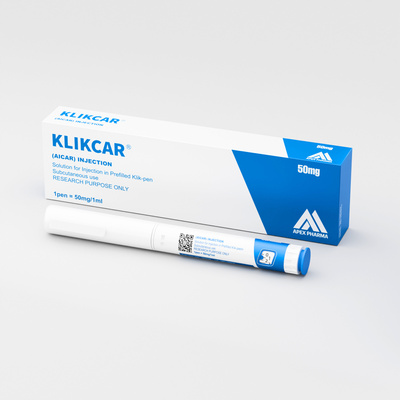
KLIKGLOW 40mg
Oxidative stress, antioxidant defence, cellular detoxification, mitochondrial health and redox signalling.
§ 01
Overview
KLIKGLOW 40mg is based on research involving reduced glutathione (GSH), one of the most abundant and biologically important intracellular antioxidants in human physiology. Glutathione is a naturally occurring tripeptide composed of glutamate, cysteine and glycine, and is present in virtually every cell of the body.
Unlike dietary antioxidants that primarily neutralise free radicals directly, glutathione functions as a central regulator of the body's endogenous antioxidant defence system. It participates in detoxification, maintenance of redox balance, mitochondrial function, immune regulation and protection of cellular proteins, lipids and DNA from oxidative damage.
Because oxidative stress has been implicated in ageing and numerous chronic diseases, glutathione has become one of the most extensively studied molecules in cellular biology. Research spans fields including liver disease, neurodegeneration, cardiovascular health, metabolic disorders, exercise physiology, dermatology and critical care medicine.
Current investigations continue to explore how glutathione metabolism influences both normal physiology and disease processes, while recognising that increasing glutathione levels does not necessarily translate into improved clinical outcomes.
§ 02
Scientific Background
Cells continuously produce reactive oxygen species (ROS) as a natural consequence of metabolism. Although excessive ROS can damage cellular structures, moderate concentrations play important roles in cell signalling, immune function, tissue repair, adaptation to exercise and cellular communication.
To maintain balance, cells rely upon sophisticated antioxidant systems. Among the most important are:
• Glutathione
• Superoxide dismutase (SOD)
• Catalase
• Glutathione peroxidase
• Thioredoxin
Glutathione functions at the centre of this network by helping maintain the appropriate balance between oxidation and reduction, often referred to as redox homeostasis.
MOLECULAR STRUCTURE
Reduced glutathione (GSH) is a tripeptide consisting of glutamate, cysteine and glycine. Its unusual chemical bond makes glutathione relatively resistant to intracellular degradation. The sulphydryl (-SH) group on the cysteine residue enables glutathione to donate electrons to unstable reactive molecules.
Following oxidation, glutathione is converted into oxidised glutathione (GSSG). The enzyme glutathione reductase regenerates reduced glutathione using NADPH, allowing the antioxidant cycle to continue. The ratio of GSH:GSSG is widely used as a marker of cellular oxidative stress.
§ 03
Mechanism of Action
BIOLOGICAL FUNCTIONS
Glutathione participates in numerous essential cellular processes:
• Neutralisation of reactive oxygen species
• Maintenance of protein structure
• DNA protection
• Lipid protection
• Cellular detoxification
• Immune regulation
• Mitochondrial function
• Redox signalling
Rather than acting as a simple antioxidant, glutathione serves as a master regulator of intracellular oxidative balance.
ANTIOXIDANT DEFENCE
Reactive oxygen species can damage cell membranes, structural proteins, DNA, mitochondria and enzymes. Glutathione acts directly and indirectly through enzymes including glutathione peroxidase, glutathione S-transferases and glutaredoxins. Together, these systems help maintain cellular integrity during periods of metabolic stress.
DETOXIFICATION
Within the liver, glutathione participates in Phase II conjugation reactions, where reactive compounds become chemically linked to glutathione before excretion. Researchers have investigated glutathione's role in processing environmental toxins, endogenous metabolic by-products, pharmaceutical metabolites, heavy metals and oxidised lipids. Although glutathione is essential for normal detoxification, increasing glutathione concentrations does not necessarily accelerate detoxification in healthy individuals.
MITOCHONDRIAL FUNCTION
Mitochondria are major sources of reactive oxygen species. To prevent oxidative damage during ATP production, mitochondria maintain their own specialised glutathione pools. Experimental studies suggest glutathione contributes to protection of mitochondrial membranes, regulation of oxidative phosphorylation, ATP production, mitochondrial enzyme function and cellular energy metabolism. Disruption of mitochondrial glutathione has been associated with several neurodegenerative and metabolic disorders.
§ 04
Human & Preclinical Research
EXERCISE PHYSIOLOGY
Exercise transiently increases oxidative stress. Contrary to earlier assumptions, this increase is not entirely harmful — moderate oxidative stress stimulates beneficial adaptations including mitochondrial biogenesis, antioxidant enzyme production and improved metabolic efficiency. Researchers continue investigating whether altering glutathione availability influences these adaptive responses. Current findings remain mixed, with some studies suggesting excessive antioxidant supplementation may blunt certain exercise-induced signalling pathways.
IMMUNE FUNCTION
Research has investigated effects on T lymphocytes, macrophages, neutrophils, natural killer cells and cytokine signalling. Adequate intracellular glutathione appears important for maintaining normal immune cell function, although the clinical implications of supplementation remain under investigation.
LIVER RESEARCH
The liver contains some of the highest glutathione concentrations in the body. Scientific investigations have explored glutathione metabolism in relation to non-alcoholic fatty liver disease (NAFLD/MASLD), alcohol-associated liver injury, drug-induced liver injury, viral hepatitis and cholestatic liver disease.
DERMATOLOGY RESEARCH
Research areas include oxidative stress in skin ageing, UV-induced cellular damage, melanin biology, skin barrier function and collagen preservation. Although glutathione has gained popularity in cosmetic applications, current clinical evidence supporting many aesthetic claims remains limited and inconsistent.
HUMAN CLINICAL EVIDENCE
Because glutathione participates in numerous physiological systems, human studies span many different medical specialties — Parkinson's disease, liver disease, critical illness, diabetes, respiratory disease, male fertility and dermatology. Results vary considerably depending upon disease state, route of administration, dose, duration and baseline glutathione status. No single clinical conclusion applies across all conditions.
§ 05
Pharmacology
One challenge in glutathione research involves pharmacokinetics.
Researchers continue investigating differences between:
• Oral administration
• Intravenous administration
• Liposomal formulations
• Sublingual delivery
• Inhaled formulations
The extent to which exogenous glutathione increases intracellular glutathione remains an active area of investigation. Some researchers instead study precursors such as N-acetylcysteine (NAC), which support endogenous glutathione synthesis.
§ 06
Safety & Research Limitations
SAFETY PROFILE
Glutathione is naturally present throughout the human body. Clinical studies have generally reported favourable tolerability across several routes of administration. Researchers continue evaluating long-term supplementation, route-specific safety, pharmacokinetics, rare hypersensitivity reactions and clinical efficacy across disease states. As with many endogenous compounds, demonstrating physiological importance does not necessarily establish therapeutic benefit.
RESEARCH LIMITATIONS
Several limitations should be considered:
• Variable study quality
• Different administration methods
• Diverse patient populations
• Mixed clinical outcomes
• Limited evidence supporting some cosmetic applications
Future research will help determine where glutathione supplementation provides measurable clinical benefit.
§ 07
Future Research
Current areas of investigation include:
• Healthy ageing
• Neurodegenerative disease
• Mitochondrial medicine
• Metabolic syndrome
• Liver disease
• Precision antioxidant therapy
• Cellular redox biology
Understanding glutathione regulation remains one of the central questions in modern oxidative stress research.
§ 08
Key Scientific Takeaways
- Reduced glutathione (GSH) is a tripeptide of glutamate, cysteine and glycine — the body's principal intracellular antioxidant.
- Central regulator of redox homeostasis; the GSH:GSSG ratio is a widely used marker of cellular oxidative stress.
- Critical for Phase II hepatic detoxification, mitochondrial membrane protection and immune cell function.
- Excessive antioxidant supplementation may blunt beneficial exercise-induced signalling adaptations.
- Pharmacokinetics of exogenous GSH are formulation-dependent; NAC is often studied as an alternative endogenous precursor.
§ 09
Selected References
- Meister A, Anderson ME. Glutathione. Annual Review of Biochemistry.
- Jones DP. Redefining Oxidative Stress.
- Forman HJ, et al. Glutathione: Overview of Biological Roles.
- Nature Reviews Molecular Cell Biology — Redox Biology.
- Free Radical Biology & Medicine.
- Journal of Hepatology.
- Antioxidants (Basel).
Standard Research Disclaimer
All Apex Performance compounds are supplied strictly for in-vitro laboratory research use only. They are not drugs, foods, cosmetics, or dietary supplements, and are not intended for human or animal consumption, diagnosis, treatment, cure, or prevention of any disease. Content on this page summarises published scientific literature for educational reference and does not constitute medical advice or a product claim. Purchasers assert they are qualified professionals acting within applicable law.