
← Research index
Tirzepatide (dual GIP / GLP-1 receptor agonist)
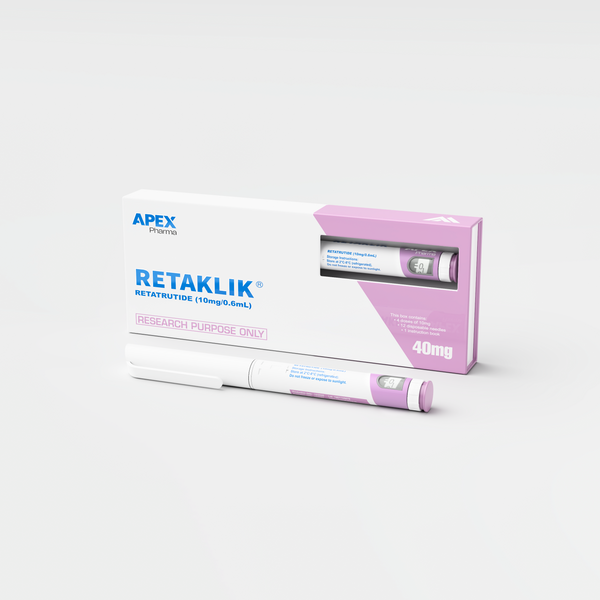
RETAKLIK 40mg
Extended-duration incretin receptor activation and long-term metabolic adaptation — higher-concentration research formulation.
§ 01
Overview
RETAKLIK 40mg represents a higher-concentration formulation of tirzepatide intended for research investigating prolonged activation of the glucose-dependent insulinotropic polypeptide (GIP) and glucagon-like peptide-1 (GLP-1) receptor systems. Although the underlying pharmacology is identical to lower-concentration formulations, higher-dose investigations have primarily focused on understanding the relationship between receptor occupancy, metabolic adaptation, appetite regulation, glycaemic control, and body composition over extended treatment periods.
Tirzepatide has become one of the most extensively studied incretin-based therapies in modern metabolic research. Large multicentre clinical trials involving thousands of participants have demonstrated significant effects on glycaemic control, body weight, and numerous cardiometabolic risk markers. These findings have generated considerable scientific interest in the physiological mechanisms underlying dual incretin receptor activation.
Unlike traditional weight-management interventions that rely solely on caloric restriction, tirzepatide appears to influence multiple integrated biological systems. Research suggests coordinated effects involving pancreatic endocrine function, gastrointestinal motility, central appetite regulation, hepatic glucose metabolism, adipose tissue biology, inflammatory signalling, and cardiovascular physiology. Extended-duration studies continue to examine whether these adaptations remain stable over time or undergo physiological compensation.
§ 02
Scientific Background
COMPOUND CLASSIFICATION
Tirzepatide belongs to the class of dual incretin receptor agonists, a newer generation of peptide therapeutics designed to simultaneously activate:
• Glucose-dependent insulinotropic polypeptide (GIP) receptors
• Glucagon-like peptide-1 (GLP-1) receptors
These receptors are expressed throughout multiple tissues, including pancreatic islet cells, the gastrointestinal tract, central nervous system, adipose tissue, liver, cardiovascular system and kidneys. By engaging both receptor systems concurrently, tirzepatide aims to reproduce a broader range of physiological responses than selective GLP-1 receptor agonists alone.
PHYSIOLOGICAL ROLE OF INCRETIN HORMONES
Incretin hormones are released from specialised enteroendocrine cells following nutrient ingestion. Their primary biological purpose is coordinating nutrient utilisation between multiple organs. Normal incretin physiology contributes to:
• Regulation of insulin secretion
• Suppression of inappropriate glucagon release
• Gastric emptying
• Satiety signalling
• Glucose disposal
• Lipid metabolism
• Energy homeostasis
Research indicates that impaired incretin function contributes to metabolic disorders including obesity and type 2 diabetes. Dual agonists attempt to restore or augment these signalling pathways.
§ 03
Mechanism of Action
DUAL RECEPTOR ACTIVATION
Tirzepatide binds to both GIP and GLP-1 receptors with high affinity. Although both receptors belong to the class B G-protein coupled receptor family, they activate overlapping but distinct intracellular signalling pathways. Activation results in increased cyclic AMP production, leading to enhanced insulin secretion under glucose-dependent conditions.
Because insulin release remains dependent upon elevated glucose concentrations, receptor activation generally produces less hypoglycaemia than agents stimulating insulin independently of glucose levels.
PANCREATIC EFFECTS
Within pancreatic beta cells, studies demonstrate enhanced insulin biosynthesis, increased glucose-dependent insulin release, improved beta-cell responsiveness and reduced glucotoxic stress. Research also suggests reduced glucagon secretion during hyperglycaemia, contributing to improved fasting and postprandial glucose regulation.
APPETITE REGULATION
One of the most consistently observed effects of tirzepatide involves altered appetite regulation. Neuroimaging studies investigating GLP-1 receptor agonists demonstrate altered activity within brain regions associated with hunger perception, food reward, impulse control, meal termination and food motivation. Although the precise contribution of GIP signalling remains under investigation, combined receptor activation appears to enhance satiety while reducing overall caloric intake. Most clinical studies conclude that reduced energy intake is the primary mechanism responsible for observed body weight changes.
GASTRIC MOTILITY
GLP-1 receptor stimulation delays gastric emptying, reducing the rate at which nutrients enter the small intestine. This produces reduced postprandial glucose excursions, prolonged satiety, smaller meal sizes and slower carbohydrate absorption. Interestingly, research indicates that gastric slowing becomes less pronounced with chronic administration, while appetite suppression generally persists.
§ 04
Human & Preclinical Research
DOSE-RANGING STUDIES
Early phase clinical investigations evaluated multiple tirzepatide doses to determine the relationship between receptor activation and metabolic outcomes. Researchers generally observed dose-dependent improvements in HbA1c, fasting glucose, body weight, waist circumference and insulin sensitivity. Higher-dose groups also experienced a greater frequency of gastrointestinal adverse events, particularly during dose escalation. These observations established gradual titration as an important feature of subsequent clinical trial protocols.
LONG-TERM WEIGHT MANAGEMENT RESEARCH
The SURMOUNT programme investigated tirzepatide over treatment periods extending beyond one year. Across these investigations, researchers observed sustained reductions in body weight alongside lifestyle intervention. Additional improvements were reported in blood pressure, triglycerides, HDL cholesterol, liver enzymes and inflammatory biomarkers. Researchers continue investigating whether these physiological changes translate into improved long-term clinical outcomes.
GLYCAEMIC CONTROL
Large randomised trials consistently demonstrate substantial improvements in glycaemic regulation among adults with type 2 diabetes. Reported findings include reductions in HbA1c, fasting plasma glucose and postprandial glucose excursions. Several studies also documented improvements in measures of beta-cell function and insulin sensitivity.
CARDIOMETABOLIC OUTCOMES
Beyond glucose regulation, investigators have explored broader cardiometabolic effects. Observed changes include reduced visceral adiposity, lower systolic blood pressure, improved lipid profiles, reduced inflammatory markers and improved insulin resistance. Whether these biomarker improvements produce corresponding reductions in cardiovascular events continues to be evaluated in dedicated outcome trials.
BODY COMPOSITION
Weight reduction associated with tirzepatide reflects changes in multiple tissue compartments. DXA studies demonstrate that fat mass accounts for the majority of weight reduction, visceral adipose tissue decreases substantially, and lean mass also declines — although typically to a lesser extent than total body weight. Current research is investigating interventions that may preserve skeletal muscle during prolonged weight reduction, including resistance exercise and increased dietary protein intake.
§ 05
Pharmacology
Structural modifications incorporated into tirzepatide increase resistance to enzymatic degradation by dipeptidyl peptidase-4 (DPP-4). Attachment of a fatty acid side chain promotes reversible albumin binding, substantially extending circulating half-life.
Approximate pharmacokinetic characteristics:
• Half-life — approximately 5 days
• Time to peak plasma level — 24–72 hours
• Weekly steady state — approximately 4–5 weeks
• Administration — subcutaneous
This prolonged exposure permits relatively stable receptor stimulation throughout the dosing interval.
§ 06
Safety & Research Limitations
SAFETY PROFILE
Across large clinical trials, the most frequently reported adverse events involve the gastrointestinal system:
• Nausea
• Vomiting
• Diarrhoea
• Constipation
• Abdominal discomfort
• Early satiety
Most adverse events are classified as mild to moderate and occur during dose escalation.
Research has also evaluated less common safety concerns, including gallbladder disease, pancreatitis, acute kidney injury secondary to dehydration, delayed gastric emptying and rare hypersensitivity reactions. Appropriate participant selection and monitoring remain important components of clinical research involving incretin agonists.
RESEARCH LIMITATIONS
Although tirzepatide has one of the strongest evidence bases among metabolic peptides, several unanswered questions remain:
• Long-term safety beyond five years
• Mechanisms underlying variability in individual response
• Optimal maintenance strategies following weight loss
• Effects in older adults with sarcopenia
• Preservation of lean body mass
• Combination therapy with other metabolic interventions
§ 07
Future Research
Current scientific research is exploring potential applications in:
• Metabolic dysfunction-associated steatotic liver disease (MASLD)
• Chronic kidney disease
• Obstructive sleep apnoea
• Heart failure with preserved ejection fraction
• Polycystic ovary syndrome
• Prediabetes
• Cardiovascular disease prevention
While early findings are encouraging in several areas, many of these applications remain investigational.
§ 08
Key Scientific Takeaways
- Higher-dose research vial designed to study prolonged dual GIP / GLP-1 receptor activation.
- Dose-ranging studies show progressive improvements in HbA1c, weight and insulin sensitivity — balanced against greater GI events during escalation.
- SURMOUNT-scale trials extend evidence beyond a year, with sustained weight, blood-pressure, lipid and hepatic biomarker improvements.
- Fat mass drives most of the weight reduction; lean-mass preservation is an active research topic (resistance training + protein).
- Investigational directions extend into MASLD, CKD, OSA, HFpEF, PCOS and cardiovascular prevention.
§ 09
Selected References
- Frías JP, et al. New England Journal of Medicine. 2021.
- Jastreboff AM, et al. New England Journal of Medicine. 2022.
- Ludvik B, et al. SURPASS-3 Clinical Trial.
- Rosenstock J, et al. SURPASS-4 Clinical Trial.
- Del Prato S, et al. SURPASS Clinical Programme.
- Drucker DJ. Incretin Physiology and Therapeutics.
- Nauck MA. Physiology of GLP-1 and GIP.
- American Diabetes Association. Standards of Care in Diabetes.
Standard Research Disclaimer
All Apex Performance compounds are supplied strictly for in-vitro laboratory research use only. They are not drugs, foods, cosmetics, or dietary supplements, and are not intended for human or animal consumption, diagnosis, treatment, cure, or prevention of any disease. Content on this page summarises published scientific literature for educational reference and does not constitute medical advice or a product claim. Purchasers assert they are qualified professionals acting within applicable law.