
← Research index
Tirzepatide (dual GIP / GLP-1 receptor agonist)
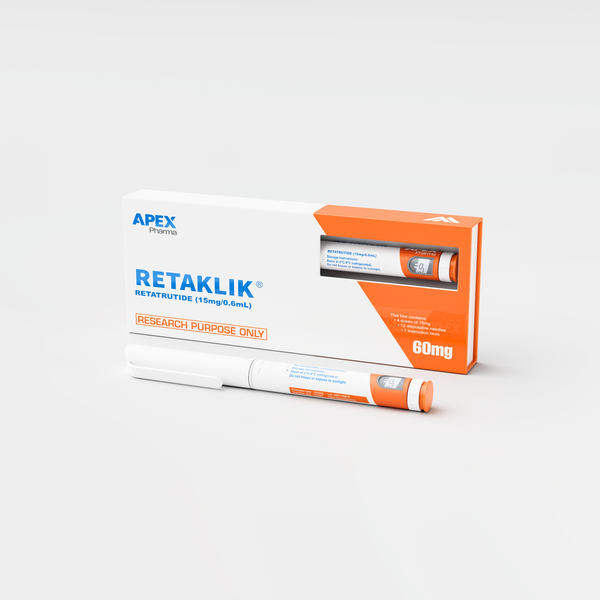
RETAKLIK 60mg
Higher-exposure dual incretin receptor activation, metabolic adaptation and long-term physiological responses.
§ 01
Overview
RETAKLIK 60mg is intended for research involving tirzepatide, a dual agonist of the glucose-dependent insulinotropic polypeptide (GIP) and glucagon-like peptide-1 (GLP-1) receptors. Tirzepatide represents one of the most extensively studied peptide-based metabolic compounds developed in recent years, with large-scale clinical programmes evaluating its effects on obesity, type 2 diabetes and broader cardiometabolic health.
Research interest in higher-concentration formulations centres on understanding the physiological effects of sustained receptor activation over prolonged periods. Rather than acting through a single metabolic pathway, tirzepatide influences numerous interconnected biological systems including pancreatic endocrine signalling, gastrointestinal physiology, central appetite regulation, adipose tissue metabolism, hepatic glucose production and inflammatory processes.
Investigators continue to examine how prolonged incretin receptor stimulation affects long-term energy balance, body composition, metabolic flexibility and cardiovascular risk. Although many mechanisms have been identified, the complex interaction between GIP and GLP-1 signalling remains an active area of metabolic research.
§ 02
Scientific Background
SCIENTIFIC BACKGROUND
The concept of incretin biology originated from observations that oral glucose stimulates a greater insulin response than intravenous glucose despite identical blood glucose concentrations. This "incretin effect" is primarily mediated by two gastrointestinal hormones:
• Glucose-dependent insulinotropic polypeptide (GIP)
• Glucagon-like peptide-1 (GLP-1)
Both hormones are released following nutrient ingestion and coordinate the body's metabolic response to food intake. In individuals with obesity or type 2 diabetes, elements of incretin signalling may become impaired. This has led researchers to investigate pharmacological activation of incretin receptors as a means of restoring aspects of normal metabolic regulation.
Unlike earlier therapies that targeted only GLP-1 receptors, tirzepatide activates both GIP and GLP-1 receptor systems simultaneously.
MOLECULAR PHARMACOLOGY
Tirzepatide is a synthetic peptide comprising 39 amino acids with structural modifications designed to increase metabolic stability and extend systemic exposure. Key pharmacological characteristics:
• Resistance to degradation by dipeptidyl peptidase-4 (DPP-4)
• Fatty-acid side-chain attachment enabling reversible albumin binding
• Extended elimination half-life of approximately five days
• Once-weekly administration in clinical investigations
Albumin binding slows renal clearance and protects the peptide from rapid enzymatic degradation, maintaining relatively consistent plasma concentrations between administrations.
§ 03
Mechanism of Action
DUAL RECEPTOR SIGNALLING
Both GIP and GLP-1 receptors belong to the class B family of G-protein coupled receptors. Activation increases intracellular cyclic AMP (cAMP), initiating signalling pathways that regulate insulin secretion, glucagon release, appetite signalling, gastric motility, lipid metabolism and glucose utilisation.
Although these receptors activate similar intracellular messengers, their physiological roles are not identical. Current evidence suggests that simultaneous activation produces complementary metabolic effects greater than activation of either receptor alone.
PANCREATIC ENDOCRINE FUNCTION
Research demonstrates that tirzepatide enhances glucose-dependent insulin secretion while suppressing glucagon secretion during periods of elevated blood glucose. Experimental studies have also investigated effects on beta-cell preservation, beta-cell responsiveness, insulin biosynthesis and pancreatic stress signalling. Whether prolonged treatment preserves pancreatic beta-cell function over many years remains under investigation.
CENTRAL APPETITE REGULATION
One of the most consistent findings across human studies involves changes in appetite regulation. GLP-1 receptors are expressed within multiple brain regions associated with feeding behaviour, including the hypothalamus, nucleus tractus solitarius and area postrema.
Neuroimaging studies suggest incretin receptor activation influences neural circuits involved in hunger perception, food reward, satiety, impulse control and meal termination. Reduced energy intake observed during clinical trials is believed to result primarily from these central nervous system effects rather than increases in resting metabolic rate.
EFFECTS ON ENERGY BALANCE
Weight regulation depends upon the relationship between energy intake and energy expenditure. Current research indicates tirzepatide primarily affects the intake side of this equation — reduced hunger, earlier meal termination, reduced snack frequency, decreased caloric intake and improved dietary adherence within structured lifestyle programmes. Whether tirzepatide significantly alters resting energy expenditure remains uncertain; metabolic chamber studies suggest reductions in energy intake account for the majority of observed body-weight changes.
§ 04
Human & Preclinical Research
EFFECTS ON ADIPOSE TISSUE
Adipose tissue functions as an active endocrine organ rather than simply a storage depot for fat. Research has investigated tirzepatide's effects on visceral adiposity, subcutaneous fat distribution, adipocyte insulin sensitivity, inflammatory cytokine production and adipokine secretion. Imaging studies demonstrate substantial reductions in visceral fat during treatment — of particular interest because visceral fat is strongly associated with insulin resistance and cardiometabolic disease.
HEPATIC METABOLISM
Studies have reported improvements in hepatic insulin sensitivity, liver fat accumulation, ALT, AST and markers of metabolic dysfunction-associated steatotic liver disease (MASLD). Several dedicated clinical programmes continue investigating tirzepatide in participants with fatty liver disease.
SURPASS CLINICAL PROGRAMME
The SURPASS programme evaluated tirzepatide in adults with type 2 diabetes. Across multiple international studies, investigators reported improvements in HbA1c, fasting plasma glucose, postprandial glucose, body weight and waist circumference. Several trials demonstrated greater reductions in HbA1c compared with basal insulin and selective GLP-1 receptor agonists under study conditions.
SURMOUNT CLINICAL PROGRAMME
The SURMOUNT programme focused on overweight and obesity. Participants receiving tirzepatide alongside dietary and lifestyle intervention experienced substantial reductions in body weight over approximately 72 weeks. Researchers also observed improvements in blood pressure, lipid profiles, inflammatory biomarkers, physical functioning and health-related quality of life. Investigators continue evaluating the durability of these changes following treatment discontinuation.
CARDIOVASCULAR RESEARCH
Cardiovascular disease remains the leading cause of mortality among individuals with obesity and diabetes. Current investigations include evaluation of endothelial function, vascular inflammation, arterial stiffness, heart failure and major adverse cardiovascular events. Although early findings are encouraging, long-term cardiovascular outcome research remains ongoing.
§ 05
Pharmacology
Following subcutaneous administration:
• Peak plasma concentrations generally occur within 24–72 hours.
• The elimination half-life is approximately five days.
• Steady-state concentrations develop after several weeks of repeated administration.
• Clearance occurs primarily through proteolytic degradation rather than renal excretion of intact peptide.
These characteristics support sustained receptor activation throughout the weekly dosing interval.
§ 06
Safety & Research Limitations
SAFETY PROFILE
The safety profile observed across clinical studies is broadly consistent with other incretin-based therapies. Most frequently reported adverse events:
• Nausea
• Diarrhoea
• Constipation
• Vomiting
• Abdominal discomfort
• Reduced appetite
These events most commonly occur during dose escalation and often diminish as treatment continues.
Investigators also monitor for less common adverse outcomes including gallbladder disease, pancreatitis, dehydration associated with gastrointestinal symptoms, delayed gastric emptying and hypersensitivity reactions. Clinical studies generally employ gradual dose titration to improve gastrointestinal tolerability.
RESEARCH LIMITATIONS
Despite extensive investigation, several scientific questions remain unanswered:
• Physiological adaptation during prolonged treatment
• Maintenance of weight loss following discontinuation
• Mechanisms underlying variable individual responses
• Preservation of skeletal muscle mass
• Long-term endocrine adaptations
• Interaction with exercise training
• Optimal nutritional strategies during treatment
§ 07
Future Research
Ongoing research continues to explore tirzepatide in a variety of metabolic and cardiovascular conditions, including:
• Metabolic dysfunction-associated steatotic liver disease (MASLD)
• Obstructive sleep apnoea
• Chronic kidney disease
• Heart failure
• Cardiovascular prevention
• Metabolic syndrome
• Prediabetes
Additional work is also investigating the molecular biology of dual incretin receptor activation and its effects on cellular metabolism.
§ 08
Key Scientific Takeaways
- Higher-exposure research vial for studying prolonged dual GIP / GLP-1 receptor activation.
- Reduced energy intake — not increased expenditure — appears to drive most body-weight change.
- SURPASS shows strong HbA1c / fasting glucose response; SURMOUNT shows sustained ~72-week weight, BP, lipid and QoL improvements.
- Visceral adiposity and hepatic fat markers (ALT/AST, MASLD indices) improve alongside weight loss.
- Open questions: durability after discontinuation, lean-mass preservation, exercise interaction and long-term CV outcomes.
§ 09
Selected References
- Jastreboff AM, et al. Tirzepatide Once Weekly for the Treatment of Obesity. New England Journal of Medicine. 2022.
- Frías JP, et al. Tirzepatide versus Semaglutide Once Weekly in Type 2 Diabetes. New England Journal of Medicine. 2021.
- Rosenstock J, et al. SURPASS-4 Trial.
- Ludvik B, et al. SURPASS-3 Trial.
- Del Prato S, et al. SURPASS Clinical Programme.
- Drucker DJ. Incretin Biology and Therapeutics.
- Nauck MA. Physiology of GLP-1 and GIP.
- American Diabetes Association. Standards of Care in Diabetes.
Standard Research Disclaimer
All Apex Performance compounds are supplied strictly for in-vitro laboratory research use only. They are not drugs, foods, cosmetics, or dietary supplements, and are not intended for human or animal consumption, diagnosis, treatment, cure, or prevention of any disease. Content on this page summarises published scientific literature for educational reference and does not constitute medical advice or a product claim. Purchasers assert they are qualified professionals acting within applicable law.